
Last Updated: November 12, 2026
Quick Summary
Luxury stationery is worth the price when you divide cost by uses: a 188-page notebook used five days a week lasts roughly nine months of daily writing. It suits daily writers, planners, and anyone who cares how paper and pen feel in the hand. Occasional writers and decor buyers should skip it.
- Run the cost-per-use math before buying: a 188-page notebook used five days a week lasts about nine months.
- The notebooks use 85 lb text paper, which resists show-through when you write on both faces.
- Run five quality checks before you commit: paper behavior, binding strength, cover durability, writing comfort, and ink compatibility.
- Match paper to your pen, since the collection is built around ballpoint writing with black ink.
- Skip premium stationery if you write only occasionally, prefer typing, or buy it mostly as decor.
Table of Contents
- What Luxury Stationery Actually Costs Per Use
- The Benefits of High-Quality Paper You Can Feel
- Durability, Repairability, and the Heirloom Question
- A Practical Quality-Testing Framework for Writing Gear
- How to Choose Personalized Stationery That Gets Used
- Best Luxury Stationery Brands 2026: What Separates Them
- Who Benefits From Premium Stationery, and Who Does Not
- Build Your Rotation With the Legacy Collection
- Frequently Asked Questions
What Luxury Stationery Actually Costs Per Use
Is luxury stationery worth the price? It depends on how many times you'll actually use it. A notebook that costs more than a drugstore spiral feels extravagant until you divide it across a year of daily pages. This guide from Claudine Lucille breaks that math down honestly, because most buyers never run it.
Here's the truth most stationery guides skip: the price tag isn't the real number. Cost per use is.
The Notebook Math Most Buyers Skip
Take a lined notebook with 188 pages. If you write in it five days a week, that's roughly nine months of daily use. Divide the price by those pages and the per-use cost drops considerably.
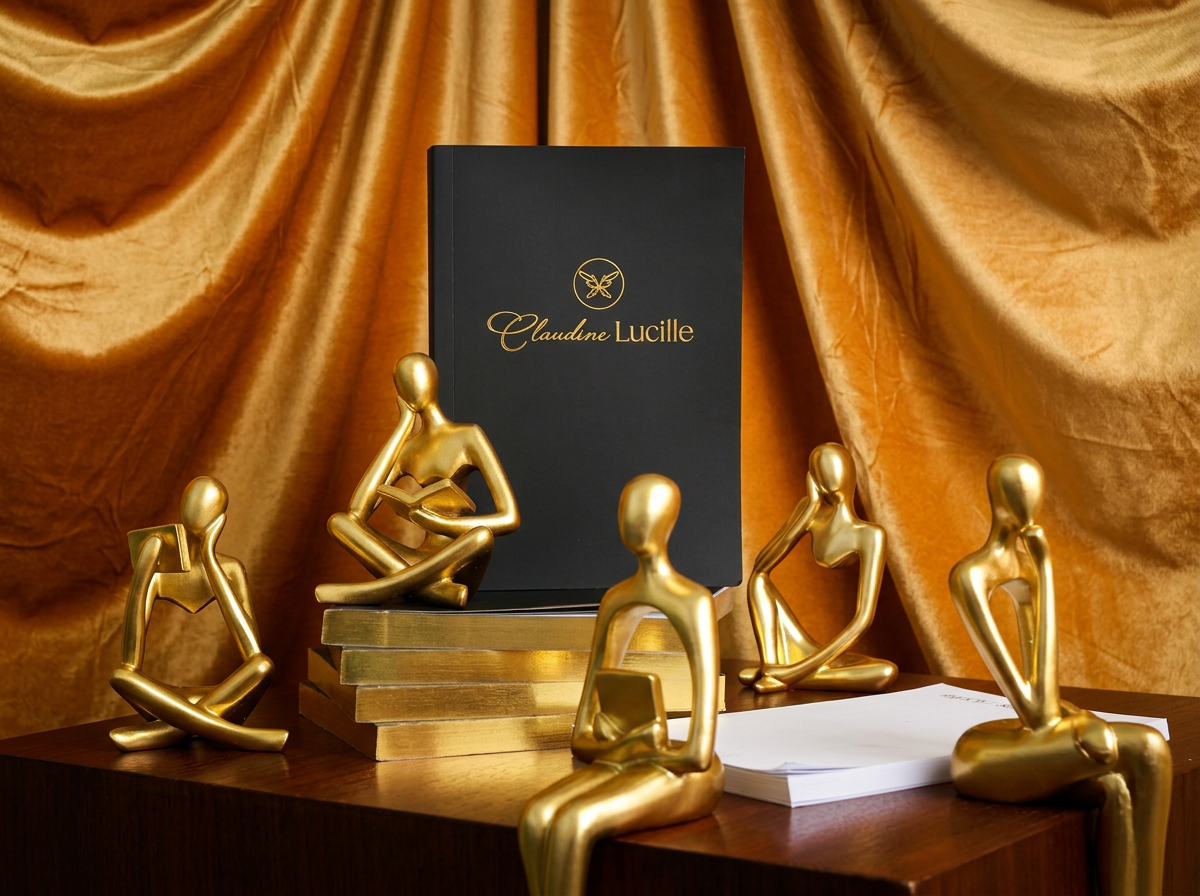
Most of us never run this calculation. We compare stickers, not lifespans. A Legacy Notebook with gold-gilded edges, 188 ruled pages, and a matte black softcover is designed to last. That changes the equation entirely.
The buyers who feel cheated by premium stationery are usually the ones who bought it as decoration. The ones who feel smart bought it to write in.
The Benefits of High-Quality Paper You Can Feel
The notebooks use 85 lb text paper.
Paper weight is the clearest signal. Heavier stock resists show-through from the reverse side, which matters if you write on both faces. For anyone curious what premium paper actually delivers in the hand, a premium gold foil notebook review walks through paper, foil, and feel in detail.
Durability, Repairability, and the Heirloom Question
The Legacy Notebook is perfect bound with a softcover, and the collection is designed to be inherited.
Repairability is the quieter factor. A well-made notebook doesn't need repair, because nothing on it is meant to fail. For a deeper look at what makes stationery worth keeping, this guide on heirloom-quality stationery that lasts covers the construction details that matter.
A Practical Quality-Testing Framework for Writing Gear
A practical quality test comes down to five checks you can run in the shop or at your desk: paper behavior, binding strength, cover durability, writing comfort, and ink compatibility. Run each one before you commit, and you'll know within minutes whether a piece is built to last or dressed up to look like it.
Here's the framework we'd use in the shop:
- Paper behavior: Write a line, then flip the page. If the ink ghosts through badly, the stock is too thin for daily use. Heavier stock, like the 85 lb text in our notebooks, resists show-through from the reverse side, which matters if you write on both faces.
- Binding strength: Open the notebook flat and press the spine. Pages should stay put, not crack or shed.
- Cover durability: Flex the cover. It should feel firm, not flimsy.
- Writing comfort: Grip the pen and write a full paragraph, and notice how it feels in your hand.
- Ink compatibility: This is the test most buyers forget. Write a line, wait a moment, and see whether the ink sits cleanly on the surface or feathers at the edges.
Pen, Ink, and Paper Compatibility Checks
Compatibility is worth checking before you commit to a notebook and pen. The variables that matter are feathering (ink spreading at the edges), bleed-through (ink reaching the reverse side), drying time (how long before a page can be closed), and show-through (ghosting visible from the back).
For ballpoint users, the check is simple: write a line, wait a moment, and see whether the ink sits cleanly on the surface. Our ballpoint pens use black ink with a fine writing width, which suits lined pages well. If you're weighing pen options, the guide to premium pens for professional writing covers what holds up to daily use.
Be honest about what you write with. Our collection is built around ballpoint writing, so match your pen to the paper before you buy.
Run these five checks before you commit to a piece.
| Check | What to do | What to look for |
|---|---|---|
| Paper behavior | Write a line, then flip the page | Ink should not ghost through badly |
| Binding strength | Open flat and press the spine | Pages stay put, not crack or shed |
| Cover durability | Flex the cover | Feels firm, not flimsy |
| Writing comfort | Write a full paragraph | Notice how it feels in your hand |
| Ink compatibility | Write a line and wait a moment | Ink sits cleanly, no feathering at edges |
How to Choose Personalized Stationery That Gets Used
Personalized stationery gets used when it fits your actual habits, not your aspirational ones. Choose based on how often you write, what you write with, and where the piece will live. A notebook that matches your desk and your routine is the one you'll reach for.
Ask yourself three questions before buying:
- How often will I open this? Daily use justifies a higher price. Occasional use doesn't.
- What do I write with? Match paper to your pen, not the other way around.
- Where will it sit? A piece that looks right on your desk gets used more than one tucked in a drawer.
Personal preference matters here, and it's not a cop-out. The best stationery is the one you actually want to pick up.
Best Luxury Stationery Brands 2026: What Separates Them
The best luxury stationery brands in 2026 separate themselves through materials, construction, and design consistency, not logos. What sets them apart is whether every detail earns its place, from paper weight to the finish on a pen case, and whether the brand tells you those details up front.
Look at what a brand actually specifies. Paper weight, binding type, pen materials, and refill compatibility tell you more than any tagline. A brand that publishes these details is usually a brand that stands behind them. A brand that hides behind mood photography and vague words like "premium" is asking you to pay for prestige alone.
Design consistency matters too. A collection where the notepad, notebook, and pen feel like they belong together is a collection you'll use as a set. That coherence is the difference between a drawer of mismatched pieces and a rotation that works.
A Buying Lens for Avoiding Prestige-Only Purchases
Most buyers never get a straight answer to "is luxury stationery worth the price" because brands sell aspiration, not specifications. Here's the lens we'd use to separate real value from marketing:
- Ask what the paper weighs. A stated weight (like 85 lb text) tells you how the page will behave. "Premium paper" with no number is a red flag.
- Ask how it's bound. Perfect bound, sewn, or glued pads behave differently over a year of daily use. The binding is the first thing to fail.
- Ask whether the pen refills. A pen you can refill is a tool; a pen you can't is a disposable in a nice case.
- Ask what the brand won't tell you. Missing specs usually mean missing quality, not modesty.
If you want to see how this lens applies in practice, the Legacy Collection complete set lists its paper weight, binding, and pen details.
Who Benefits From Premium Stationery, and Who Does Not
Premium stationery suits daily writers, planners, and anyone who treats writing as part of their thinking. The honest answer is that luxury stationery is worth the price for some habits and not others.
It's worth it if you:
- Write or plan most days
- Care about how paper and pen feel in the hand
- Want tools that last rather than get replaced
- Value design that fits your desk and your taste
Skip it if you:
- Write only occasionally
- Prefer typing for most notes
- Don't notice paper or pen differences
- Buy stationery mostly as decor
There's no shame in either column. Knowing which one you're in is the whole point. A quick value checklist helps: if you can picture yourself using the piece at least a few times a week, the cost per use works in your favor.
Build Your Rotation With the Legacy Collection
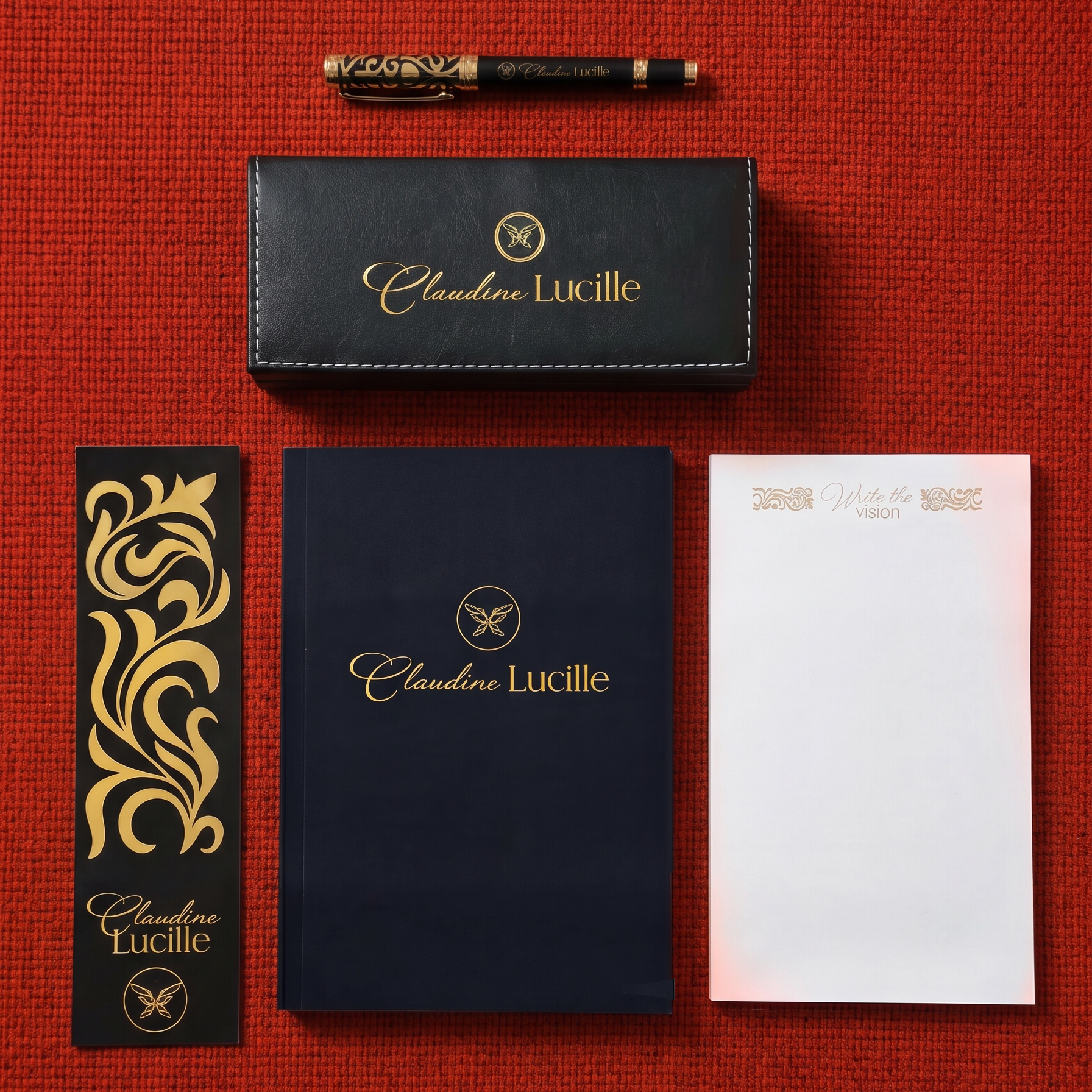
The Legacy Collection brings together four pieces, one intention: a notepad, a lined notebook, a bookmark, and a ballpoint pen in a leather case, all in rich black and gilded gold.
Each piece is designed to complement the next and to last. The matte black covers with gilded edges, the pen's leather case, and the 85 lb paper are the details of the set. If you're ready to stop comparing stickers and start building a rotation, the Legacy Collection complete set is the place to begin.
The real question isn't whether luxury stationery costs more. It's whether you'll use it enough to make the price irrelevant. If you write most days and want tools that feel as good as they look, Claudine Lucille has built a collection for exactly that: gold-foil notebooks with gilded edges, a ballpoint pen that arrives in a leather case, and pieces designed to be inherited rather than replaced. Get started with Claudine Lucille and give your best thinking a place to land.
Frequently Asked Questions
What makes stationery considered luxury?
Luxury stationery is defined by materials and construction, not just a logo. Look for heavier paper stock (85 lb and up), gilded or sewn edges, covers that hold their shape, and metal pens with replaceable refills. Presentation matters too: a pen that arrives in a lined leather case signals a different level of care than one in a blister pack. The test is whether those details change how the piece performs over years of use, not whether the box photographs well.
Does the quality of paper actually affect writing performance?
Yes, in ways you notice immediately. The benefits of high-quality paper show up most in journaling and planning, where you write on both sides of a page and want the notebook to survive being carried around.
Is it worth buying expensive notebooks for daily journaling?
It depends on how often you write. A 188-page notebook used five days a week lasts roughly nine months. If you journal a few times a month, a standard notebook may be the smarter buy.
How do I know a pen will work with my ink and paper before I buy?
Check three things: the refill type, the tip width, and the paper weight. The Legacy Pen has a 0.05 mm writing width and accepts 11mm x 0.7 mm refills. Test a corner page with your own pen before you commit to a notebook.

0 comments