
Last Updated: November 11, 2026
Quick Summary
To learn how to choose heirloom quality stationery, start with the paper: check GSM weight, opacity and cotton content, then test the binding and match the finish to your pen. Confirm archival quality through acid-free, lignin-free labelling and standards like ISO 9706, and store pieces flat in acid-free boxes away from damp and heat.
- Cotton fibres are longer and stronger than wood pulp, so cotton-rich paper tolerates repeated handling.
- Open the book flat and press the crease; pages should not crack or pull loose.
- Fine nibs suit wove or vellum, while medium and broad nibs handle laid texture.
- Look for ANSI/NISO Z39.48 or ISO 9706 certification as proof of permanent paper.
- Store stationery flat or upright in a cool, dry, dark place in acid-free boxes or sleeves.
Table of Contents
- Start With the Paper: Weight, Cotton Content, and Finish
- Test the Binding and Construction Before You Commit
- Match Your Writing Instrument to the Paper Finish
- What Is Archival Quality Paper, and Why Does It Matter?
- How to Store Fine Stationery for the Long Haul
- Best Luxury Stationery Brands 2026: What to Look For
- Build Your Heirloom Stationery Wardrobe Piece by Piece
- Choose Your First Heirloom Piece From Claudine Lucille
- Frequently Asked Questions
Start With the Paper: Weight, Cotton Content, and Finish
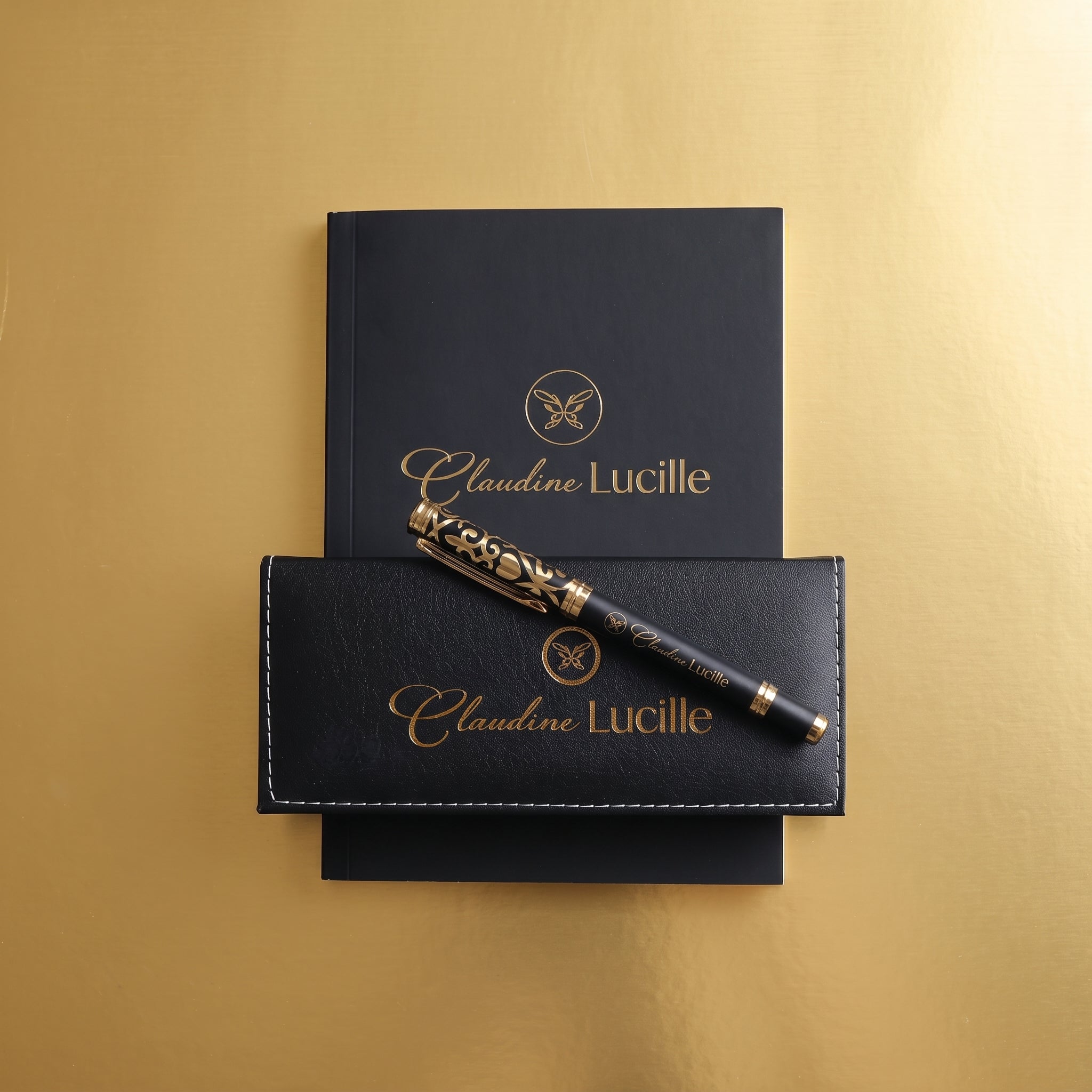
Learning how to choose heirloom quality stationery starts with the paper itself, because everything else, the cover, the binding, the pen, is built around it. At Claudine Lucille, we think of paper as the foundation of a piece meant to be handed down, not used up. Get the paper wrong and no cover can save it.
Reading GSM and Paper Weight Without Getting Fooled
GSM stands for grams per square metre, and it tells you how heavy and dense a sheet is. A higher number usually means a thicker, sturdier page that resists bleed-through.
But numbers alone won't tell you the whole story. A tightly pressed heavy sheet can feel thinner than a lighter, loftier one.
Check three things before you commit:
- Weight: heavier sheets handle wetter inks and repeated handling
- Opacity: hold a page up to the light; you should not see the reverse text
- Finish: smooth for fine nibs, textured for expressive strokes
Why Cotton Content Changes Everything
Cotton content is the share of the paper made from cotton fibres rather than wood pulp. Cotton fibres are longer and stronger than wood pulp fibres.
A common mistake is assuming all heavy paper is cotton-rich. It isn't.
Test the Binding and Construction Before You Commit
Binding decides whether your stationery survives being opened a thousand times. A beautiful cover hides a weak spine, so test the construction before you buy.
Run this quick checklist:
- Open the book flat and press the crease; the pages should not crack or pull loose
- [ ]
- Look for even page alignment with no ragged edges
- Feel the cover; it should flex slightly, not snap rigid
- Confirm the gold edging sits flush and does not flake
Match Your Writing Instrument to the Paper Finish
Paper finish and writing instrument are a partnership, and the finish is not one thing. Most heirloom-grade paper falls into one of three structures, and each behaves differently under a nib. Knowing which is which is the difference between a page that flatters your hand and one that fights it.
Laid paper carries faint parallel lines pressed into the sheet during manufacture, with heavier chain lines running the other way. The texture is subtle but real, and it gives a fountain pen a gentle, audible feedback. Laid finishes suit broader nibs and slower, more deliberate writing; a very fine nib can catch on the ridges if the paper is dry.
Wove paper is the smooth, uniform sheet most people picture when they think of fine stationery. The fibres are woven so closely that no pattern shows. It is the most forgiving finish for fine nibs and for anyone who writes quickly, because the point glides without snagging.
Vellum in the stationery sense means a smooth, slightly translucent, hard-surfaced sheet, not the animal-skin vellum of old manuscripts. Its tight surface resists absorption, which keeps ink sitting on top and produces crisp, sharp lines. The trade-off is drying time: wetter inks linger, so a blotter or a moment's patience matters.
Match the instrument to the structure:
- Extra-fine and fine nibs want wove or vellum; laid ridges can interrupt a hairline stroke
- Medium and broad nibs have enough ink flow to handle laid texture and will show off its character
- Flex and stub nibs lay down wide, wet lines and need an absorbent, sized sheet so ink settles instead of pooling
- Ballpoints and rollerballs are forgiving on almost any finish, but rollerball ink is wet enough to feather on loosely sized paper
Ink type matters as much as nib width. Dye-based inks soak in quickly and are the safer pairing for textured sheets; pigment and iron-gall inks sit wetter and reward a harder, well-sized surface. A common pattern among fountain-pen writers is to keep one smooth notebook for fast drafting and one textured pad for slower, more formal correspondence, the same logic as keeping different shoes for different ground.
Watch out: gold-foil or coated decorative pages can resist ink unevenly, so a nib that writes beautifully on the plain sheets of a book may skip or smudge on the gilded ones. Test a corner of the actual page you plan to write on, not a sample of a different finish.
If you're weighing whether paper built for fountain pens earns its place in your rotation, it's worth reading more on whether fountain pen friendly notebook paper is worth it. And if you're choosing the instrument itself, you can see the Legacy Pen with Leather Case as a starting point.
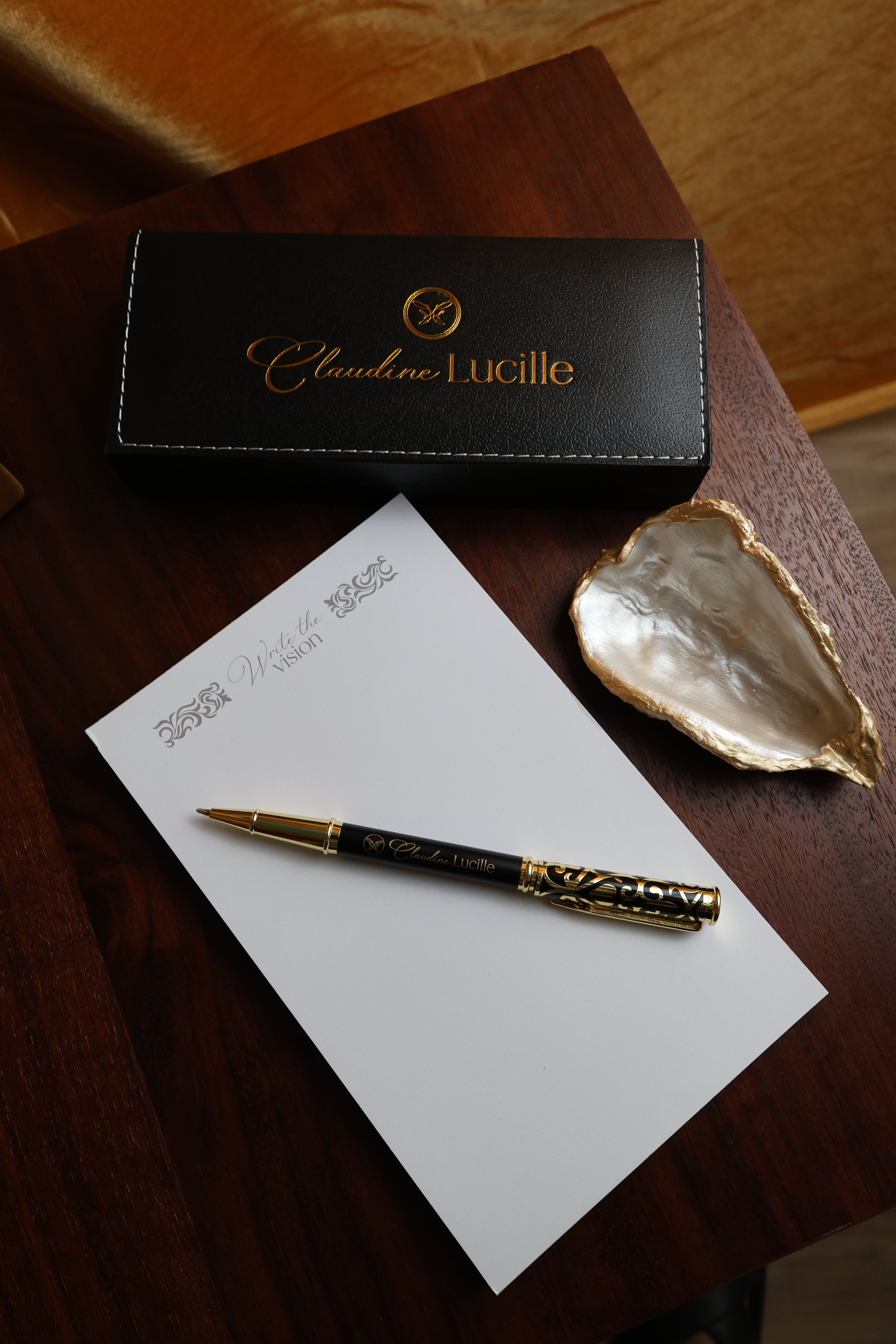
Each paper structure behaves differently under a nib, so pair the finish to the instrument you actually write with.
Finish |
What it is |
Best for |
|---|---|---|
Laid |
Faint parallel lines with heavier chain lines |
Broader nibs and slower, deliberate writing |
Wove |
Smooth, uniform sheet with no visible pattern |
Fine nibs and anyone who writes quickly |
Vellum |
Smooth, slightly translucent, hard-surfaced sheet |
Crisp, sharp lines; needs drying time |
What Is Archival Quality Paper, and Why Does It Matter?
Archival quality paper is paper engineered to resist the slow chemical decay that turns ordinary paper yellow, brittle and foxed over decades. The buying guides stop at the label; the useful part is understanding what the label is protecting you from, because a note written today may be read by someone fifty years from now, and acidic paper quietly eats its own ink along the way.
Three mechanisms do most of the damage:
Acid hydrolysis. Paper made from wood pulp carries residual acids from processing. In the presence of moisture and warmth, those acids break the long cellulose chains that give paper its strength. The sheet doesn't just discolour, it weakens from the inside, which is why old newspaper crumbles at the fold while old cotton rag paper stays supple.
Lignin oxidation. Lignin is the stiffening agent in wood. It is not fully removed in ordinary pulp, and as it oxidises it turns brown and releases acids of its own. Lignin-free pulp is the single most reliable defence against yellowing.
Sizing and coatings. The sizing that keeps ink from feathering can itself be acidic. Neutral or alkaline sizing keeps the sheet stable while still giving ink a clean surface to sit on.
Cotton helps because its fibres are longer and stronger than wood pulp, so the paper tolerates handling and repeated opening without cracking.
- Acid-free or pH-neutral labelling, ideally with the pH stated
- Cotton or rag content noted as a percentage, not just implied
- Lignin-free pulp, which resists yellowing
- Buffered or alkaline reserve noted for long-term storage
- Neutral sizing, so ink sits evenly without introducing new acidity
- ANSI/NISO Z39.48 or ISO 9706 certification, the published standards for permanent paper, a maker who meets them will usually say so
If a maker won't tell you any of this, that's your answer. Vague language about "premium" or "luxury" paper is not a specification.
Here is the part most guides skip: archival quality is only half the equation. A buffered, cotton-rich sheet stored in a damp basement or a hot attic will still degrade, and plastic wrap that traps moisture can do more harm than good. Store heirloom stationery flat or upright in a cool, dry, dark place, in acid-free boxes or sleeves, with acid-free tissue between written pages you want to preserve. Handle with clean, dry hands so oils don't transfer to the page. A simple rule: if you wouldn't store a photograph there, don't store your stationery there either.
The storage habits are what let that head start actually reach the next generation.
How to Store Fine Stationery for the Long Haul
How you store fine stationery matters as much as how it's made. Poor storage undoes good craftsmanship faster than daily use ever will.
Keep these habits:
- Store flat or upright in a cool, dry place, away from direct sun
- Use acid-free boxes or sleeves, never plastic wrap that traps moisture
- Keep away from damp basements and hot attics
- Handle with clean, dry hands to avoid oils transferring to the page
- Slip a sheet of acid-free tissue between written pages you want to preserve
A simple rule: if you wouldn't store a photograph there, don't store your stationery there either.
Best Luxury Stationery Brands 2026: What to Look For
Judging the best luxury stationery brands in 2026 comes down to materials, construction and honesty about both. Pretty covers are easy; lasting quality is not.
Ask these questions of any brand:
- Does it state paper weight and cotton content plainly?
- Is the binding sewn or carefully glued?
- Are the materials named, or hidden behind vague language?
- Does the design stay cohesive across the collection?
For a wider look at who is doing this well, our roundup of the best luxury stationery brands to know is a good next read.
Build Your Heirloom Stationery Wardrobe Piece by Piece
A stationery wardrobe is a small, considered rotation of pieces that cover every writing moment. You don't buy it all at once; you build it the way you'd build a good wardrobe, one honest piece at a time.
Start with a lined notebook for plans and notes, a notepad for quick thoughts, and a pen you enjoy holding.
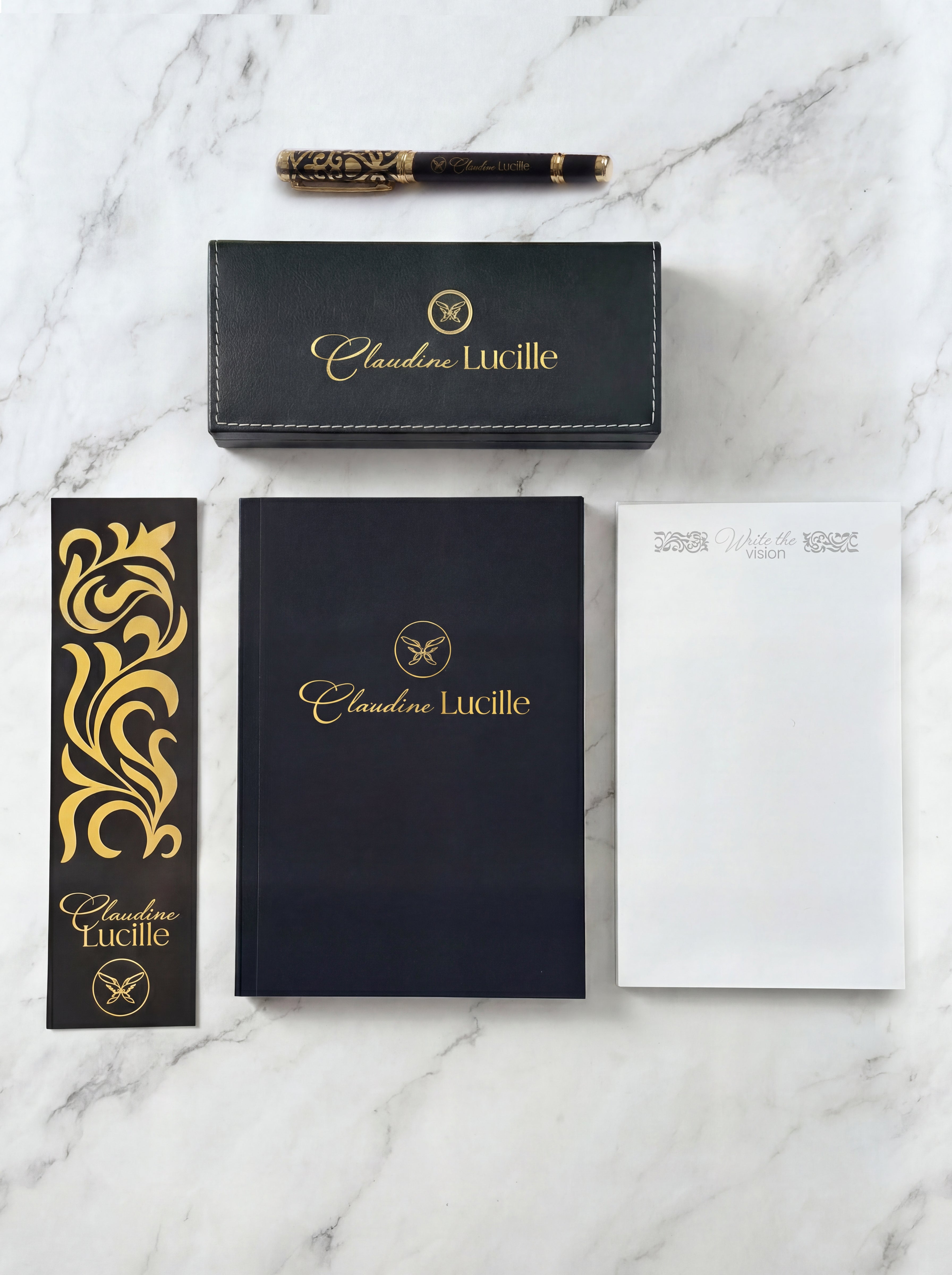
If you'd rather assemble the whole rotation in one considered move, you can view the Legacy Collection complete set to see how the pieces work together.
Choose Your First Heirloom Piece From Claudine Lucille
Your first heirloom piece should be the one you'll reach for daily. For most people, that's a notebook paired with a pen that feels good in the hand.
At Claudine Lucille, our pieces are built with that in mind. The matte black covers carry gilded edges, and the pens arrive in a leather case. Each piece is designed to be a lasting keepsake, a space for planning and breakthroughs.
Start with The Heirloom, our signature set pairing a gold-edged notebook with a pen in a tailored leather case.
The real test of heirloom stationery is time, and that test begins the moment you choose. Pick paper that holds ink, binding that holds pages, and a pen you love to hold. Claudine Lucille builds exactly that: matte black covers with gilded edges, pens presented in a fine leather case, and durable construction intended to be inherited. Get started with Claudine Lucille and give your best thinking a place to land.
Frequently Asked Questions
What makes stationery considered heirloom quality?
Heirloom stationery combines three things: paper with cotton content, a well-anchored binding, and a design you will not tire of. Look for gilded edges as a decorative finish. The test is simple: would you feel comfortable writing a letter your granddaughter might read in forty years? If the answer is no, keep looking.
How do I know if paper is archival quality before buying?
Ask two questions: what is the paper's composition, and how heavy is it? If a brand cannot tell you the paper's composition or weight, that silence is your answer. Claudine Lucille's Legacy Notebook uses 85lb text paper with gilded edges, built for writing you intend to keep.
Will heirloom stationery work with my fountain pen?
It depends on the finish, not just the weight. Test a new notebook on its last page first with your wettest ink to see how the paper handles your pen.
How should I store fine stationery so it lasts for generations?
Keep it away from direct sunlight, humidity, and heat. Write the date inside the cover to record when you bought it. A short note about when and why you bought it turns a nice notebook into a documented heirloom.

0 comments